
Deep Insights Into Today’s Global Economy
The global economy has exhibited a complex and volatile trend in recent years, influenced by a complex interplay of factors. The world economy is experiencing unprecedented challenges and opportunities, with the volatile international situation profoundly impacting economic trends. From the recovery momentum of major economies to the divergent performance of financial markets, what investment opportunities and risks are hidden behind each data point?
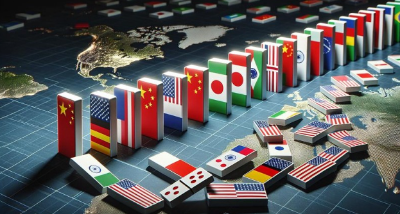
Slowing Global Growth Patterns and Increasing Divergence
Reports from multiple international institutions indicate that developed economies face significant challenges to growth. The US economic growth rate has fallen to 2.0%, while the Eurozone and Japan are at only 1.3% and 1.1% respectively, all facing challenges from weak external demand and stagnant structural reforms.
Behind this slowdown lies a deep-seated structural cause. First, the aging population problem continues to worsen in most developed economies. For example, in Japan, the proportion of people aged 65 and over has exceeded 30%, severely constraining labor supply and innovation. Second, global debt has climbed to $337.7 trillion, exceeding 350% of GDP, with the US federal debt approaching $39 trillion, raising serious questions about fiscal sustainability. Third, the problem of income inequality in Western developed economies is also becoming increasingly prominent, suppressing consumption growth potential and exacerbating social conflicts.
In stark contrast, emerging markets and developing economies have become the main engine of global growth, with a growth rate of 4.2%, among which ASEAN countries performed particularly well, maintaining a growth rate of 4.7%. This divergence reflects a profound restructuring of the global economic landscape: traditional developed economies are experiencing sluggish growth, while Asia, Latin America, and Africa are gradually reshaping the global economic and trade landscape through supply chain diversification and digital transformation. The Asia-Pacific region continues to lead global growth, with Southeast Asian countries becoming new hotspots for global manufacturing layout thanks to their young populations, continuously improving infrastructure, and proactive industrial policies.
Behind the weak global growth are both short-term risks such as the spread of unilateralism and protectionism and escalating geopolitical conflicts, as well as long-term structural problems such as population aging, rising debt, and income inequality. Furthermore, high inflation and debt pressures constrain the policy space of most countries. IMF data shows that by 2030, the US government debt-to-GDP ratio will rise to 143.4%, while low-income countries face the dual pressures of reduced external aid and high debt servicing costs.
Financial Volatility and the Reconstruction of Trust in the Monetary System
In 2025, international gold prices saw their largest increase since the 1978 oil crisis, highlighting gold's safe-haven appeal. Behind this phenomenon lies the rising credit risk of the US dollar: the out-of-control scale of the US federal government debt, exceeding 120% of GDP, coupled with political risks such as government shutdowns, has driven international capital towards safe-haven assets like gold.
A report from the Bank for International Settlements shows that the proportion of the US dollar in global central bank foreign exchange reserves has fallen from over 70% at the beginning of this century to around 58% in recent years.
The weakening of the US dollar's credit is intertwined with the diversification of the international monetary system. On the one hand, countries are reducing their dependence on the US dollar by increasing gold holdings, reducing holdings of US Treasury bonds, and promoting settlement in their own currencies. For example, the BRICS countries are promoting the establishment of a local currency settlement system, and China and Saudi Arabia completed their first crude oil transaction settled in RMB. On the other hand, the application of digital currencies is accelerating. Europe and Japan have issued stablecoins pegged to the euro and yen, respectively, while the RMB is expanding its use in emerging markets through mechanisms such as the Belt and Road Initiative and the RCEP, and its share of international payments continues to increase. IMF data shows that by the second quarter of 2025, the US dollar's share of global foreign exchange reserves had fallen to 56%, a 30-year low.
Global debt risk has become another major concern. A report from the Institute of International Finance states that by the first half of 2025, global debt reached $337.7 trillion, exceeding 350% of GDP. Of this, US federal debt is close to $39 trillion, while developing countries' external debt repayment gap reached $741 billion, the highest level in over 50 years. The declining high-interest-rate environment and increased debt pressure could trigger a wider range of debt defaults. Particularly in Africa, countries like Zambia and Ethiopia are already on the verge of default, forcing the IMF to activate new bailout mechanisms.
Technological and Industrial Transformation as Dual Drivers
Artificial intelligence and green industries are expected to be the dual drivers of the global economy in 2025. US tech giants have invested trillions of dollars in AI-related projects, but high corporate debt has raised concerns about a bubble. The total interest-bearing debt of 1,300 major global technology companies has risen to $1.35 trillion, four times that of 2015. The IMF has warned that the current surge in AI investment resembles the dot-com bubble, and if the returns on technology fall short of expectations, it could trigger a significant market correction.
Despite this, the long-term potential of AI is widely recognized. The WTO predicts that AI could boost global trade by 34% to 37% by 2040; Steve Hoffman, CEO of Founders Space, a well-known Silicon Valley incubator, stated that 2025 will be a turning point for AI to "truly create value," with its productivity-enhancing effects gradually becoming apparent.
The large-scale application of artificial intelligence technology is reshaping the global technological and economic landscape. In the manufacturing sector, industrial robots and intelligent manufacturing systems optimize production processes, quality control, and supply chain management, significantly improving production efficiency. In the service sector, applications such as intelligent customer service, automatic translation, and financial risk control shorten human-computer interaction time, effectively reducing operating costs. In the medical field, AI can replace traditional manual drug development processes in many areas, such as target identification, compound screening, and crystal form prediction, shortening the new drug development cycle by more than half.